
The party that controls the mold and the component revision is the party named in the tooling and change-control documents — not the party whose sales office you visited. In a building block supplier relationship, that means three separate questions get three separate answers: who owns the steel, who holds the current revision, and who signs the conformity paperwork for the SKU you actually buy. If your contract does not freeze tool ownership, storage period, release conditions, and the revision that defines production, you do not control the kit even if you paid for the tool.
A buyer's RFQ lands in Chenghai with a full parts list, a target price, and one line at the bottom: 'Please confirm mold ownership.' That single line is where most sourcing relationships are actually decided. This page maps responsibility across the tool, the revision, the sample, and the certificate so an importer, distributor, or education-supply sourcing manager can approve a supplier without confusing a showroom with a factory.
What this means for your sourcing decision
- Tool ownership is a contract field, not a factory visit. A buyer who paid a tooling fee but left storage years and release conditions unfrozen ended up with no defined answer on who holds the tool or what happens if it sits idle.
- Revision control lives on the physical item. At the Canton Fair, a booth sample is often a hero unit; a tool number and revision labelled on the table is the production standard, and a Fair photo is not.
- A sealed golden sample on the QC shelf settles colour, fit, flash, and function disputes that email threads cannot. Approving from a photo alone tends to surface on the second lot.
- Certificates are product- and lot-specific. A UKCA file and a VOC file are different papers; paperwork that does not match the market, lot, and test is not paperwork.
- MOQ and material in a catalogue are commercial starting points, not evidence of tool ownership, revision control, or capability. Those must be confirmed per SKU in writing.
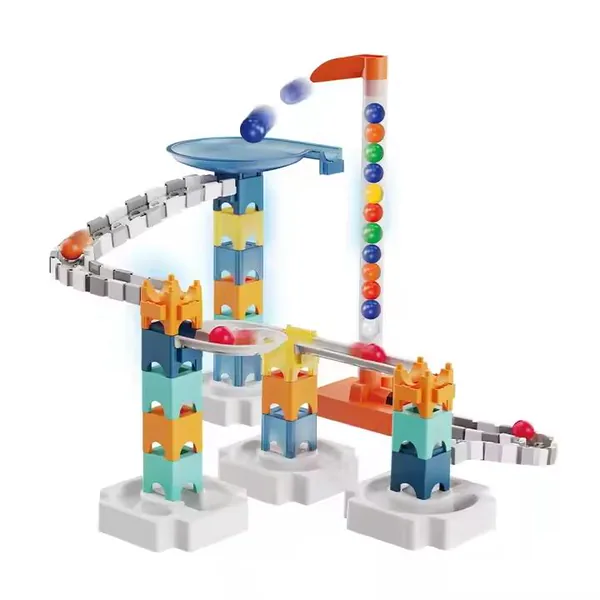
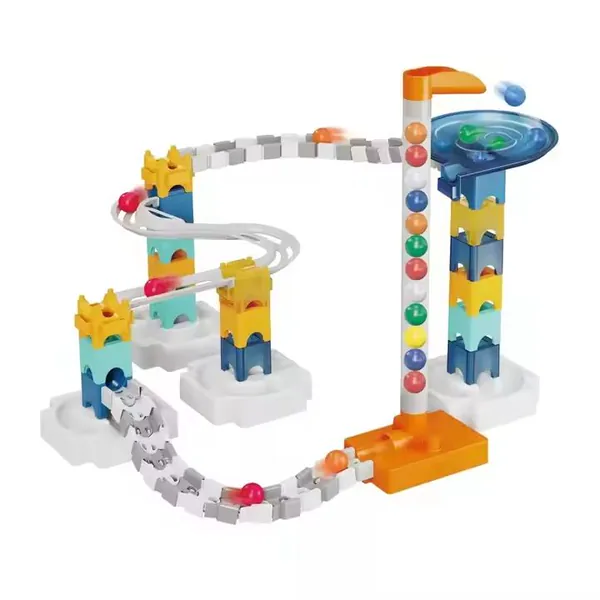
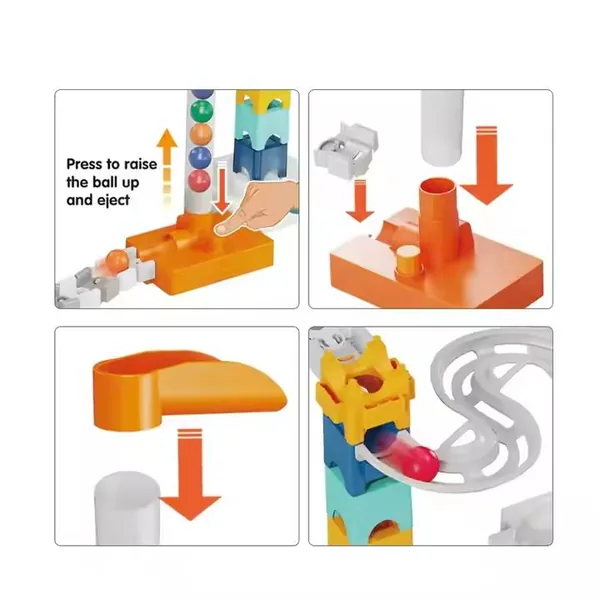
What does the EU Toy Safety Directive say about who is the manufacturer?
Under Directive 2009/48/EC, the manufacturer — the operator with detailed knowledge of design and production — alone carries out the conformity assessment, and anyone who places a toy on the market under their own name or trademark, or modifies it in a way that affects compliance, is treated as the manufacturer. That legal definition is the backbone of your responsibility map. It does not regulate mold ownership, and it does not say a sales office equals a factory. What it does say is that control over design and production is what creates manufacturer obligations.
Read that against a construction kit and the practical consequence is blunt. If you change a component, a material, or a mold cavity in a way that can affect compliance, you may have moved manufacturer responsibility onto yourself. So the revision question is not a factory-floor detail; it is a legal-role question. Importers introducing toys from third countries must verify compliance and carry their name and address on the product, and distributors must handle the goods with due care. Traceability across the chain is what makes those roles enforceable.
In the US, the Children's Product Certificate follows the same logic from the other direction. According to the CPSC, a CPC is product-specific, based on third-party testing at a CPSC-accepted laboratory, and must identify the domestic manufacturer or importer certifying compliance, the date and place of manufacture, the testing dates and locations, and the laboratory. It is not a blanket factory certificate. If the certifying firm on the CPC is your importer entity, then the overseas factory is not the responsible certifying party — and that is exactly the kind of distinction a showroom visit will never reveal.
How do you separate a sales office from manufacturing ownership?
Ask for the tool. Not a photo of the tool — the tool record: tool number, cavity count, current revision, and the maintenance log covering wear, vent cleaning, corrosion, lubrication, alignment, and replacement of damaged inserts. A trading company can forward a quotation in an hour. It cannot forward a maintenance log it does not keep.
Then ask where finished assembly happens, because that is what the place-of-manufacture field on a CPC is about — at minimum the city or administrative region and country, and the factory street address when one manufacturer runs multiple locations in the same city. A supplier whose answer is a sales-office address has told you something useful. In Chenghai, the industrial cluster is dense enough that trading offices and factories sit on the same streets, so the address alone proves nothing and the documents have to carry the weight.
The third question is the one buyers skip: who can change the BOM, and under what approval? A BOM should identify every plastic, pigment, coating, adhesive, insert, battery, and package component that can affect compliance or function. If no one can name the person who signs a component substitution, no one controls revisions — regardless of who owns the mold.
Responsibility map: who controls what on a construction kit
| Mold / tool ownership | Named in the tooling agreement: fee, ownership, storage period, release conditions, idle-tool outcome. Confirm in writing per tool. |
|---|---|
| Component revision control | Held by whoever can approve a BOM change. Ask for the approver's role and the revision number on the physical part. |
| Production standard | A sealed golden sample on the QC shelf, compared on colour, fit, flash, and function. A photo is not a standard. |
| Defect release discipline | Failed lot isolated, defect class recorded, release only after rework. The AQL number comes from the agreed PO inspection plan, not a catalogue sentence. |
| EU conformity role | Manufacturer carries conformity assessment; own-brand or compliance-affecting modification can make the buyer the manufacturer. Confirm per SKU. |
| US certification role | CPC is product-specific and names the certifying domestic manufacturer or importer, the place of manufacture, and the CPSC-accepted laboratory. |
| Traceability record | Links SKU, mold cavity, resin lot, component lots, production date, process, and carton or pallet identifier. Request a sample record. |
| Commercial terms | Incoterms version plus named place — Shantou or Shenzhen as actually booked. FOB without a named place is an argument waiting to happen. |
Chenghai and Shantou: why the cluster matters for tooling control
Chenghai, in Shantou, Guangdong, is where a large share of China's plastic toy tooling, injection, painting, assembly, and packaging capacity sits within a short drive. That density is the supply-chain advantage: a mold shop, an injection house, and an assembly line can be three separate businesses in the same district, which shortens iteration and lets a buyer split tooling from production if the contract allows it. It also creates the trap. When tooling, molding, and assembly are separate legal entities, 'the factory' is a chain, not a building, and ownership has to be assigned entity by entity.
Yiwu plays a different role. It is a trading and small-commodity hub, strong for assortment, low-volume mixed orders, and export consolidation, and weaker as a place to verify injection tooling or revision control, because much of what ships through Yiwu is sourced from elsewhere. If your construction kit is a licensed or proprietary build with custom molds and a parts list that must stay frozen, the tooling conversation belongs in the manufacturing cluster. If you are testing an assortment of generic building sets across a season, Yiwu's consolidation model can be the faster route — with the explicit understanding that you are buying a trading relationship, not tool control.
A single Chenghai address can host a manufacturer, a factory-and-trading hybrid, and a pure trader. The business-type label is a starting point; the tooling documents are the verdict.
How do you verify a building block supplier before you release a PO?
Work in this order, and stop when an answer does not arrive.
First, the tooling file. Fee, ownership, storage period, release conditions, and the idle-tool outcome. A buyer once asked who owned the tool after paying the fee, and the contract had not frozen storage years or release conditions; the fix was to write the policy as a document instead of a handshake. Get that document before the deposit, not after.
Second, the revision card. Tool number and current revision, labelled on the physical sample and on the production standard. If the supplier cannot state the revision, you cannot approve a change to it, and you cannot prove later that a substitution was unauthorized.
Third, the sealed golden sample. Colour, fit, flash, function. This is the physical reference that ends disputes; email does not. Keep it sealed, dated, and signed by both sides, and compare bulk against it lot by lot.
Fourth, the inspection plan. Ask for the AQL that will appear on the PO and the defect classes that trigger isolation and rework. A supplier who quotes an AQL from a catalogue instead of an inspection plan is telling you the number is decorative.
Fifth, certificate-to-lot mapping. Take the market, the lot, and the test, and ask which file covers which. A UKCA file and a VOC file are not interchangeable, and a certificate that does not match the lot is not evidence. For the US, read the CPC fields directly: product identification, the applicable CPSC rules cited, the certifying firm with a full mailing address and telephone number, the test-record contact, the date and place of manufacture, the testing dates and locations, and the CPSC-accepted laboratory. Note that from July 8, 2026, importers of most regulated consumer products must electronically file compliance certificates with US Customs and Border Protection through a Partner Government Agency Message Set, so your documentation workflow should be ready for that.
Sixth, the traceability record. Ask to see one. A useful record links the SKU, mold cavity, resin lot, component lots, production date, operator or process, and carton or pallet identifier. If the supplier cannot produce a sample record for an existing SKU, the system exists on paper only.
Finally, the commercial terms. Incoterms version and named place. FOB without a named place once started a freight argument that outlasted the production run. Write Shantou or Shenzhen as actually booked.
Concentrated tooling vs. split sourcing: which model fits your kit?
Choose a single integrated manufacturer when your kit has proprietary molds, a frozen parts list, and compliance paperwork that must stay tied to one production chain. You get one throat to choke on revision control, one place-of-manufacture answer, and a cleaner technical file. The trade-off is dependency: if that factory's tooling or capacity slips, your whole line slips with it.
Choose split sourcing — tool with one entity, mold and assemble with another — when you want cost separation, second-source capacity, or a specialist for a difficult part. It works, but only if the tooling agreement names the tool owner, the storage and release terms, and the revision authority across all parties. Without that, split sourcing is how a kit quietly drifts out of spec between lots.
Choose a trading or consolidation route when you are testing assortment breadth, not defending a proprietary build. You trade tool control for speed and range, and you should price that trade honestly into your risk budget.
What MOQ and price posture should a construction kit buyer expect?
MOQ in this category is set by tooling economics and packaging, not by a single industry number, and it varies widely by SKU. In our own catalogue, construction and building sets run from a low of 1 piece on a magnetic marble-run set to 240 pieces on ball-run and stick-building sets, with most items sitting between 18 and 144 pieces. Those are commercial starting points for our own SKUs — they are not a market standard, and any supplier quoting a single universal MOQ for all construction kits is simplifying.
Treat catalogue MOQ and material as a starting point for the RFQ, never as evidence of tool ownership or revision control. The two questions are unrelated, and conflating them is how buyers end up with a compliant-looking quote and an uncontrolled tool.
FAQ: mold ownership and revision control for construction kits
If I pay a tooling fee, do I automatically own the mold?
No. Ownership depends on what the tooling agreement says. A buyer who paid a fee but left storage years and release conditions unfrozen had no defined answer on ownership or on what happens if the tool sits idle. Freeze fee, ownership, storage period, release conditions, and idle-tool outcome in writing before the deposit.
How do I know which revision of a component is actually in production?
Ask for the tool number and revision labelled on the physical sample and on the production standard, and compare bulk against the sealed golden sample on colour, fit, flash, and function. A booth sample or a Fair photo is often a hero unit and is not a production standard.
Does a factory visit prove who manufactures my construction kit?
No. A sales-office or showroom visit does not establish manufacturing ownership. Verify the place of finished assembly on the certification document, the tooling records, and the traceability record linking SKU, mold cavity, and production date. In Chenghai, trading offices and factories share the same streets, so the address alone proves nothing.
Can one certificate cover both EU and US requirements for a building block set?
No. EU and US regimes are separate. Under Directive 2009/48/EC the manufacturer carries out the conformity assessment, and in the US a Children's Product Certificate is product-specific, based on testing at a CPSC-accepted laboratory, and names the certifying firm, the place of manufacture, and the laboratory. Map each certificate to the market, lot, and test it actually covers.
What should I ask for if I want to second-source a construction kit?
Ask for the tooling agreement naming the tool owner and release conditions, the current revision and BOM approver, a sealed golden sample, the PO inspection plan with AQL, and a traceability record linking SKU, mold cavity, resin lot, and carton identifier. Split sourcing only holds if revision authority is assigned across every entity in the chain.
When does a component change make me the manufacturer?
Under Directive 2009/48/EC, anyone who places a toy on the market under their own name or trademark, or modifies it in a way that affects compliance, is treated as the manufacturer. A component, material, or mold-cavity change that can affect compliance is therefore a legal-role question, not just a cost decision. Confirm the specific change against the applicable rules before you approve it.
Sources
Related Products & Categories
Request a quote or a factory audit
If you are specifying a construction kit and need the tooling, revision, and certification questions answered in writing before you commit, send us your parts list and target market. We will respond with tooling terms, the current revision, sample and inspection arrangements, and the certificate-to-lot mapping for the SKU you are evaluating. For buyers who want to verify the production chain directly, we can arrange a factory visit and a document review on site.