
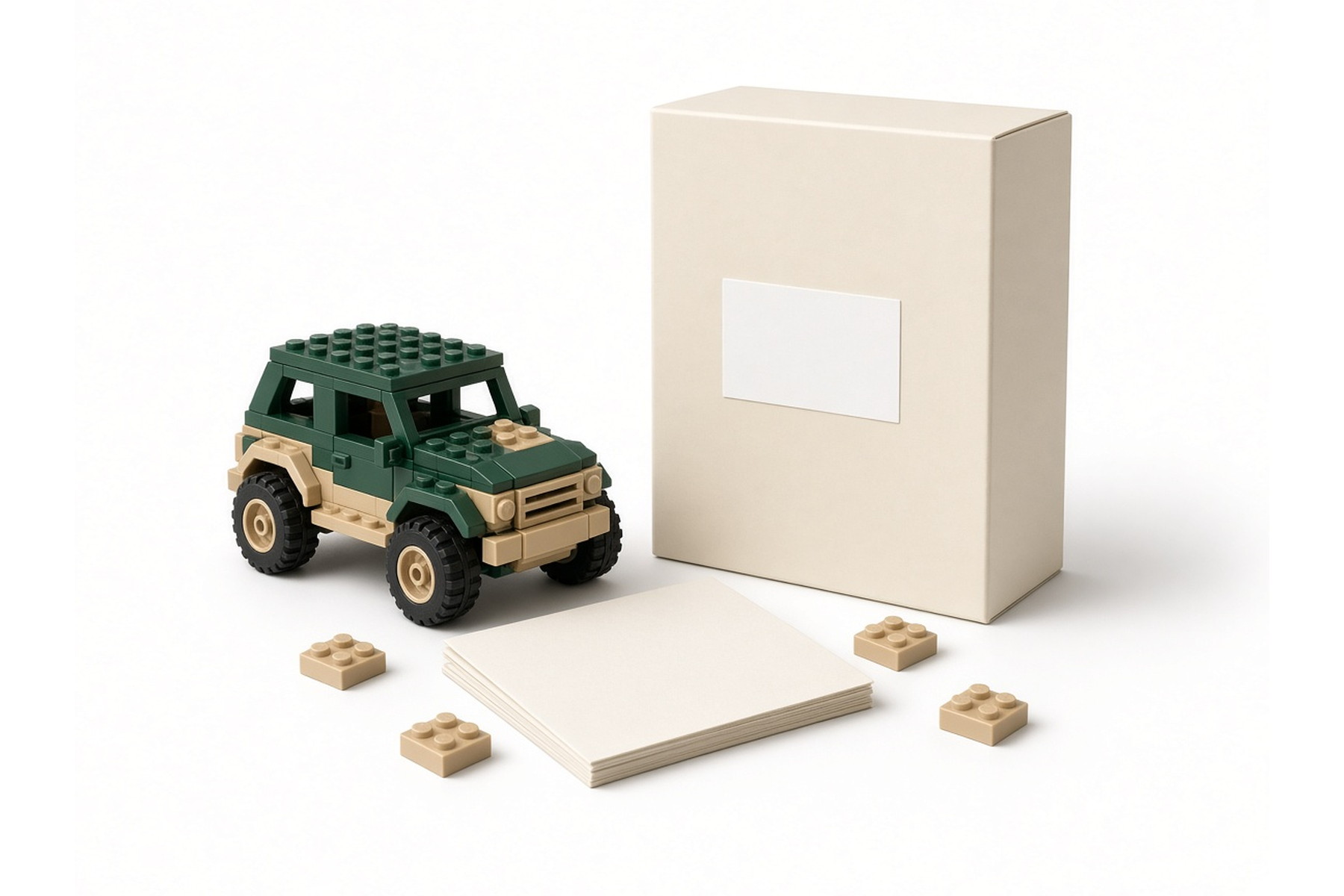
Start with packaging before new tooling
A branded box or sleeve can be a different project from changing the actual toy. Identify the selected SKU, selling unit, artwork languages, barcode ownership and retail requirements first. Do not assume a packaging project includes an exclusive product design or a change to the mold.
Create one signed artwork reference
Prepare the front panel, back panel, barcode area, contents list, warnings and instruction language. Review a physical or digital proof at actual size. Record the approved version and date, and make sure the same version appears on the purchase order and packing specification.
Define what custom means
An exclusive color, a different piece assortment, a new instruction booklet and a completely new model each affect cost and timing differently. A development brief should state the intended user, target retail price, expected order quantity, intellectual-property ownership and sample approval steps.
Treat approvals as part of the schedule
Allow separate time for sample preparation, artwork checks, any testing needed, packaging production and final inspection. A delivery promise is meaningful only after the specification, quantities and required documents have been confirmed.
Keep your product identity traceable
Connect the retail SKU, supplier item number, package version and batch reference. For repeat orders, use that record to check whether colors, piece counts or accessories have changed. Ask for an explicit change review rather than relying only on a familiar product photo.