
Define a private-label building toy labeling handoff by connection mechanism and exact variant, then approve a revision-controlled record for each sellable SKU. A magnetic marble-run assortment belongs under magnetic building toys, not non-magnetic marble-run sets. For private label building toy packaging, capture the verified variant, piece inventory, sales unit, packaging, instructions, and approval evidence together. Give each field a verification status, and authorize artwork, packing, and purchase-order release separately so an unresolved label claim cannot pass as an approved specification.
What construction mechanism and assortment role should the handoff identify?
Identify how the parts connect before assigning the assortment category or writing the front-of-box description.
Use Brick Building Sets, Magnetic Building Toys, Large Building Blocks, Marble Run Building Sets, or Creative Construction Toys as the assortment categories. Place magnetic tracks under Magnetic Building Toys; place non-magnetic buildable tracks under Marble Run Building Sets. Keep theme, intended age, and piece system in separate fields rather than using them as substitutes for the connection mechanism.
Record whether the sales unit is a complete set, an expansion pack, or a bundle. For an expansion, specify the base components needed to use it. For a mixed assortment, maintain one shared packaging specification plus a variant schedule that identifies exactly which contents, images, and labels change. Shared artwork is not permission to share an unverified piece count or compatibility claim.
Which fields belong in the labeling handoff worksheet?
| Record identity and revision | Assign a handoff ID, buyer item ID, supplier item reference, variant identifier, destination market, revision, and issue date. Link the sample ID, inventory revision, instruction revision, and artwork filename. Identify the revision this record replaces. |
|---|---|
| Connection mechanism and assortment role | Specify the category, actual connection method, and whether the product is a complete set, expansion, or bundle. Record compatibility wording only within the scope checked; distinguish physical fit from other product assessments. |
| Verified variant | Define the selected colors, component shapes, configuration, and included accessories. Compare the identified sample with that specification and attach photographs. A catalog color selection does not establish inventory availability. |
| Piece inventory and counting rule | List each component type and quantity, then reconcile the total with the proposed box claim and instruction inventory. State whether balls, connectors, spare pieces, and accessories count toward the total. Track paper inserts separately so the counting convention is unambiguous. |
| Sales unit and item identifiers | Define what one ordered unit and one retail unit contain. Map the buyer item ID and assigned barcode to the exact variant and pack level. Check that the artwork, inventory, and purchase-order description refer to the same unit. |
| Packaging and label placement | Specify the retail container, internal bags or trays, inserts, seals, and label locations. Record retail-pack and master-carton measurements separately, with the level measured identified. Define carton contents and shipping-mark artwork independently of the consumer box. |
| Instructions and illustrated builds | Identify the instruction revision and languages. Check that the inventory, assembly steps, component orientation, and illustrated builds match the selected contents. If several models are shown, establish whether they are alternative builds or can be built simultaneously. |
| Destination-specific label text | Assign a designated reviewer to approve the intended-age statement, warnings, responsible-party details, origin wording, traceability fields, languages, and any proposed marks for the destination. Keep the approved text and placement instructions attached to the artwork revision. |
| Supporting documents and claim coverage | Link product declarations and relevant reports to the identified construction and variant. Record what each document supports. Supplier-declared certifications are not verified compliance, and an assembly or packing check is not a safety test. |
| Approval and exception record | Record the release stage, decision, approver's name and role, decision date, authorized revision, and conditions. For every condition, identify the affected claim or task, correction required, owner, due date, recheck result, and closure approver/date. |
How does a magnetic marble-run catalog entry become a labeling handoff?
| Magnetic marble-run description | Catalog basis: the title describes magnetic building components and marble-run track. Handoff treatment: assign Magnetic Building Toys as the provisional assortment category, with magnetic connection supplier-declared. Request an identified sample and confirm which parts use magnetic connections before approving descriptive copy. |
|---|---|
| 188-piece box claim | Catalog basis: 188 pieces appears in the product title. Handoff treatment: retain supplier-declared status. Request a component inventory totaling 188 under an agreed counting rule, then compare it with the identified sample, instructions, and proposed box statement. |
| Plastic material description | Catalog basis: the material field records plastic. Handoff treatment: do not turn this into a claim that every component is plastic or that a particular resin is used. Request component-level material descriptions for any material claim proposed on the packaging. |
| Color-box packing | Catalog basis: packing is recorded as color box. Handoff treatment: retain supplier-declared status and request the selected retail-box structure, internal packing arrangement, dieline, and artwork revision. The phrase alone does not approve dimensions or label placement. |
Who approves artwork, packing, and the purchase order?
Use separate release decisions for artwork, packing, and the purchase order, with a named approver and an exact revision attached to each decision.
The category buyer owns the product identity and assortment specification. The packaging reviewer checks that the approved content appears on the correct dieline and pack level. A designated product-compliance reviewer assesses destination-specific wording and supporting documents. The purchasing approver then releases the order against the authorized product and packaging revisions. One person may hold several roles, but the record should identify which responsibility they are approving.
Use approved, approved with conditions, or rejected as the decision. Conditional approval must state what work may proceed and what remains blocked; it is not blanket permission to print or pack.
| Artwork decision | Approve the exact text, images, variant mapping, barcode assignment, dieline, and instruction references. Layout development may proceed under a recorded restriction, but do not release printing while an unresolved field affects printed content. |
|---|---|
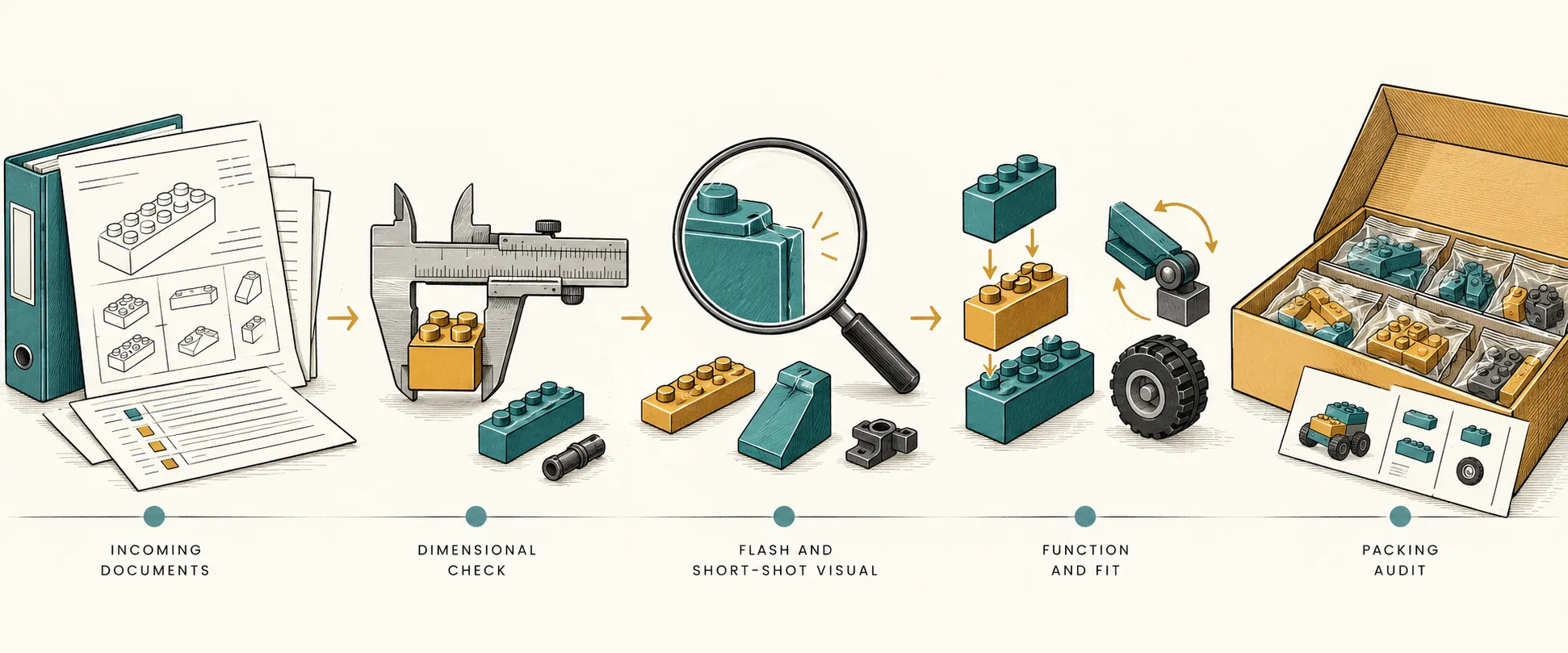
| Packing decision | Compare the identified packed sample with the approved inventory, inserts, retail artwork, and carton specification. Record the specified target and actual observation. Reject mismatched contents or labels and define the correction before packing release. |
| Purchase-order decision | Reference the approved sales unit, variant schedule, packaging revisions, and commercial terms. Do not release an unconditional production order while a labeling-affecting field remains open. Any conditional order should state the restricted work and the approval needed before it can proceed. |
| Closure decision | Attach the corrected evidence, record the recheck result against the original condition, and obtain the responsible approver's name and date. Distribute the authorized revision and identify superseded files. |
What should happen when labeling fields conflict or change?
Block the affected release, describe the discrepancy precisely, and recheck the correction against the original requirement before closing it.
For example, if a sample inventory does not reconcile with a proposed 188-piece claim, return a specific request: provide the component quantities, explain the counting rule, and reconcile the sample, instructions, and box total. Keep the count-dependent text and illustrations out of print release until that issue is resolved. Other valid evidence, such as a confirmed box structure, need not be discarded.
Treat changes to components, colors, quantities, instructions, packaging structure, or label text as revision requests. Identify which approvals the change affects rather than restarting every check automatically. Review document coverage against the changed construction and applicable destination requirements; neither a new internal item number nor an unchanged item number settles that question by itself.
Keep commercial quantities separate from labeling quantities. Piece count does not establish MOQ, units per carton do not automatically establish an order multiple, and a retail-pack measurement is not a master-carton measurement.
The handoff record supports traceability and clear authorization. It does not by itself detect an undisclosed substitution, so retain sample references and compare the packed product with the approved revision at the relevant release check.