
Factory size tells you almost nothing. The fastest way to assess a building toy supplier is to trigger a controlled parts-list discrepancy and watch three things: the quality of the evidence they return, who owns the revision, and the signoff sequence before anything ships. A supplier that resolves this cleanly has a working quality system. One that sends a photo and a promise does not.
This page gives importers, wholesale distributors, toy retail buyers and education-supply sourcing managers a scoring framework built from current regulations (16 CFR Part 1501, ASTM F963, Toy Safety Directive 2009/48/EC, GPSR 2023/988) and from floor-level practice in Chenghai and Shantou, Guangdong. It also covers how to verify any factory in that ecosystem, and what to write into the PO before you pay a tooling fee.
What to Decide Before You Shortlist
- Score the resolution, not the brochure. A supplier that cannot map a changed component to a test report, an age grade and a lot number fails the evaluation regardless of headcount or export claims.
- The sealed golden sample is the only colour and fit standard that survives a second production run. Buyers who approve from a photo typically pay for the difference on lot two.
- AQL numbers belong on the agreed inspection plan attached to the PO. If a supplier quotes a defect rate from a catalogue sentence, treat it as unverified.
- Tooling ownership, storage period and idle-tool consequences must be written before the fee is paid. A fee alone does not establish ownership.
- Certificates are product- and market-specific. A CPC is not a blanket factory certificate, and one UKCA document does not cover a VOC question on the same SKU.
Which Regulatory Documents Actually Drive a Parts-List Decision?
Three document sets decide whether a parts-list change is acceptable, and each one attaches to a different market. For the US, according to CPSC Toy Safety Business Guidance, children's toys generally require testing at a CPSC-accepted laboratory and certification in a Children's Product Certificate; the CPC is product-specific and must cite each applicable children's product safety rule, the responsible party, the records contact, the date and place of manufacture, the date and place of testing, and the laboratory. For small parts specifically, 16 CFR Part 1501 bans toys containing small parts intended for children under three, and the test cylinder in 16 CFR Part 1501.4 is approximately 2.25 inches long and 1.25 inches wide. ASTM F963 section 4.6 covers small objects, and the applicable edition should be read from the current regulation before any report is quoted.
For the EU, according to Toy Safety Directive 2009/48/EC, toys placed on the market must meet the essential safety requirements, with CE marking and an EU Declaration of Conformity matched to product scope. The General Product Safety Regulation (EU) 2023/988 is a separate instrument, and importer, manufacturer and product-identification information has to be mapped to the correct market role. Neither document certifies a factory. They attach to a product, a configuration and a lot.
The practical consequence for a discrepancy: if a knob, clip, magnet or decorative part changes, the buyer needs to know whether the change touches the small-parts determination, the age grade, the test method applied, and the label text on the principal display panel. A supplier that answers only 'same as before' has not answered.
How Do You Score a Supplier's Response to a Parts-List Discrepancy?
Use seven criteria. Score each one from documents the supplier sends you, not from statements made in a call. Where a record does not exist, write 'cannot verify' — an absence is not automatically a negative finding, but it is not a pass either.
The scoring bands are simple. Strong: the supplier produces the document within the agreed window, the document matches the SKU and lot, and the revision owner is named. Weak: the answer arrives as a photo, a verbal assurance, or a certificate that names a different product. Borderline: the right document exists but the configuration, age grade or standard edition on it does not match what you are buying.
Watch the containment step in particular. A credible factory isolates a failed lot, records the defect class, and releases only after rework. A supplier that cannot describe its containment step has no discrepancy process.
| Criterion 1 — Physical sealed-sample control | Ask whether a sealed golden sample is held and whether bulk is compared against it for colour, fit, flash and function. Weak answer: approval based on a photograph or a fair booth hero unit. |
|---|---|
| Criterion 2 — Revision labelling | Ask for the tool number and revision marked on the sample and on the production table. A fair photo is not a production standard; lighting and hero units mislead. |
| Criterion 3 — Discrepancy containment | Ask what happens to a failed lot: isolation, defect class recorded, release gated on rework. No containment description means no process. |
| Criterion 4 — Inspection-plan specificity | Ask for the AQL from the inspection plan agreed on the PO. A number quoted from a catalogue or a blog is not evidence. |
| Criterion 5 — Document-to-lot mapping | Ask which file covers which market, lot and test. A UKCA document and a VOC file are different papers; certificates that do not match the lot are not paperwork. |
| Criterion 6 — Tooling ownership and storage | Ask for the written fee, ownership, storage period and idle-tool consequences before paying. Tooling policy is a document, not a handshake. |
| Criterion 7 — Parts-list and packing data at SKU level | Ask for pieces-per-carton and packing-list data tied to the SKU and revision. Without it, a discrepancy cannot be traced to a carton or a batch. |
Supplier Profile Comparison by Sourcing Model
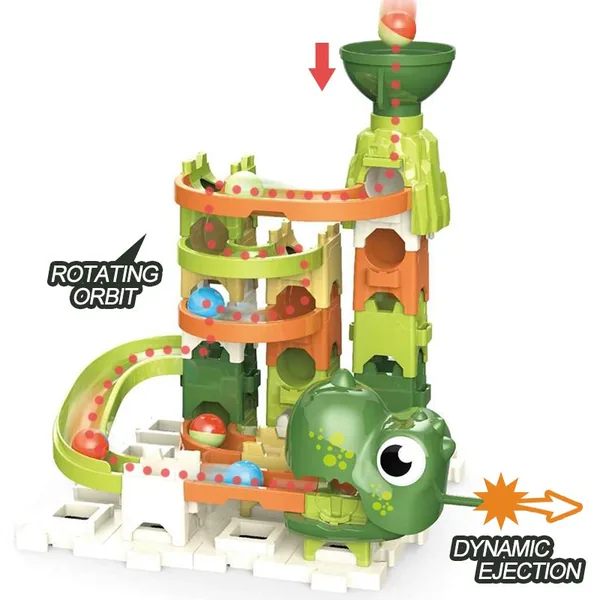
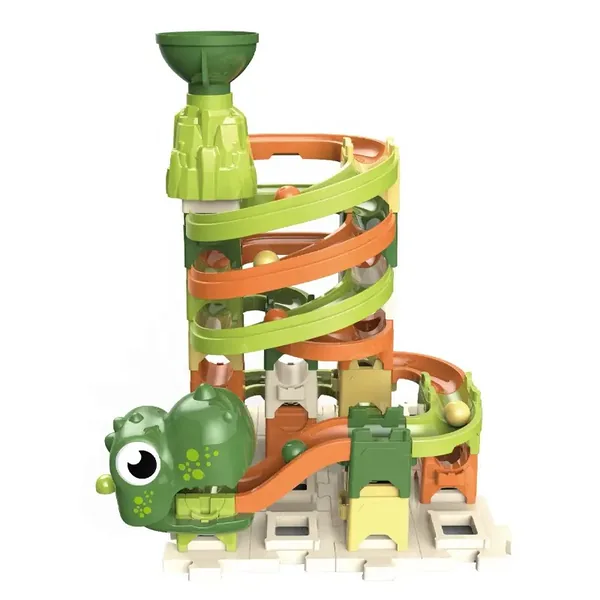
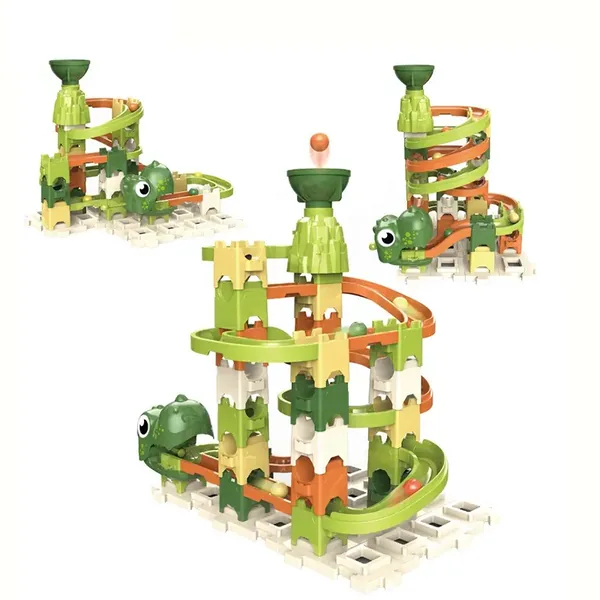
| Specialty: Plastic building-block sets (Chenghai, Shantou) | Plastic/ABS construction sets, marble runs, dinosaur track sets, brick kits. MOQ posture: varies by spec — catalogue MOQs in this category range from single digits to the low hundreds. OEM/ODM: both, tooling-dependent. Certifications: ask for CPC and CPSC-accepted lab reports for US; EN71 and EU DoC for EU; confirm per SKU. |
|---|---|
| Specialty: Magnetic building and marble-run sets (Chenghai, Shantou) | Magnetic bricks, pipe magnetic sets, 3D marble-run track. MOQ posture: varies by spec; magnet specification and age grade change the test scope. OEM/ODM: ODM common on standard shapes, OEM on packaging. Certifications: ask for magnet-specific test scope and small-parts determination; confirm per SKU. |
| Specialty: Educational/STEM building kits (Chenghai, Shantou) | STEM kits, DIY assembly kits, electronic building sets with sound and light. MOQ posture: varies by spec; electronic components add VOC and battery questions. OEM/ODM: OEM common for retail-ready packaging. Certifications: ask which file covers which market and test; a UKCA document does not answer a VOC question. Confirm per SKU. |
| Specialty: Mixed-category trading companies (Yiwu, Zhejiang) | Wide assortment across toy categories, aggregation and consolidation strength, lower depth per SKU. MOQ posture: varies by spec, often flexible on mixed containers. OEM/ODM: mostly sourcing and packaging, tooling usually outsourced. Certifications: ask for the underlying factory's file, not the trader's summary. Confirm per SKU. |
| Specialty: Plush and non-building categories (Shantou/Guangdong) | Not the focus of a building-toy evaluation. Included here only to note that tension and use-and-abuse requirements for attached parts differ by material class. MOQ posture: varies by spec. Certifications: ask for the applicable rule set for the material class. Confirm per SKU. |
Why Chenghai and Shantou Dominate Plastic Building-Toy Sourcing
Chenghai, a district of Shantou in Guangdong, is the reference cluster for plastic toys in China: mould shops, injection capacity, decoration, assembly and packaging sit within a short drive of each other. That density is the supply-chain advantage. A revision to a part can be tooled, sampled and re-tested locally rather than across a province, which shortens the discrepancy loop and makes a sealed sample practical to hold.
Shantou adds port and export logistics, plus a broader Guangdong supplier base that includes electronics and packaging. Yiwu, in Zhejiang, plays a different role: it is a trading and aggregation market, strong for mixed containers and small-batch assortment, weaker for deep tooling control on a single building-toy SKU. Choose Chenghai or Shantou when the product is your own mould and the parts list matters. Choose Yiwu when you are assembling a mixed catalogue and speed of assortment beats tooling depth.
Proximity also makes it easy to move production between workshops without telling the buyer. That is why the revision label and the sealed sample matter more here than a plant tour. A Canton Fair booth sample is often a hero unit, so photograph the revision card rather than the display.
How Do You Verify a Chinese Toy Factory Before You Commit?
Verification is a sequence, not a single audit. Start with documents: business licence, the certificate that applies to your market and SKU, and the test report behind it. A CPC should cite each applicable children's product safety rule and name a third-party, CPSC-accepted laboratory; check that the product identification on the certificate is specific enough to match your SKU and parts list. If a supplier claims an exemption or determination, the certificate should cite the applicable rule and the exemption rather than a laboratory.
Then test the sample chain. Order a sample, approve it physically, have it sealed and kept. Ask what tool number and revision the sample represents. When you place the bulk order, compare against that sealed piece for colour, fit, flash and function — email threads do not settle a colour argument, a sealed sample does.
Then test the response. Send a deliberate, documented parts-list question — a component change, a quantity variance, a label wording edit — and time the answer. You are measuring evidence quality, revision ownership and signoff sequence. Factory size, staff count and export-country claims are not on the scorecard.
Finally, plan the filing step. From July 8, 2026, importers of most regulated consumer products must electronically file certificates of compliance with US Customs and Border Protection via a Partner Government Agency Message Set. Ask how certificate data will be filed and who holds the records contact named on the CPC. If nobody can answer, that is a finding.
What Should Be in the PO Before Tooling Money Moves?
Write the inspection plan into the PO, including the AQL you agreed, the defect classes and the containment rule for a failed lot. Write the tooling terms: fee, ownership, storage period and what happens if the tool sits idle. A buyer who paid a fee without freezing storage years and release conditions has bought a dispute, not a tool.
Write the revision control clause. Any change to a component that affects the parts list, age grade, small-parts determination or label text requires written buyer approval before production. This is the clause you will rely on when a discrepancy surfaces.
Write the document list. For the US market that means the CPC and the supporting English-language test reports. For the EU it means the Declaration of Conformity and the test evidence behind CE marking, mapped to the product scope. Keep packaging wording and product markings as controlled fields, because they change with the SKU.
Buyer Questions on Building Toy Supplier Evaluation
What is the single best test to run on a new building-toy supplier?
Send a controlled parts-list discrepancy and score the response: evidence quality, revision ownership and signoff sequence. A supplier that returns a document matching the SKU and lot, names the revision owner, and describes lot containment has a working system. One that returns a photo and an assurance does not.
What MOQ should I expect for a custom building-block set from Chenghai or Shantou?
MOQ varies by spec — tooling, material, packaging and colour count all move it. Catalogue figures in this category range from single digits to the low hundreds depending on SKU complexity. Ask for the MOQ against your exact configuration and confirm it in the quotation rather than relying on a general range.
Does a Children's Product Certificate prove the factory is compliant?
No. A CPC is product-specific and based on third-party testing at a CPSC-accepted laboratory; it identifies the applicable rules, the responsible party and the records contact. It should not be described as a blanket factory certificate, and it does not by itself resolve a parts-list discrepancy.
How do I check whether a changed part triggers a small-parts violation?
Check the part against the small-parts cylinder in 16 CFR Part 1501.4, approximately 2.25 inches long and 1.25 inches wide, and confirm the age grade for the actual product configuration. Ask the supplier which test method was applied and whether the change was re-tested. Assemblies, detachable accessories and packaging components need the same review.
Who owns the mould if I pay a tooling fee to a Chinese factory?
Ownership depends on the contract, not the payment. The written terms must freeze the fee, ownership, storage period and what happens if the tool sits idle. If those terms are absent, treat ownership as unresolved and settle it before production.
Which certification applies to building toys sold in the EU?
Toys placed on the EU market must meet the essential safety requirements of Toy Safety Directive 2009/48/EC, with CE marking and an EU Declaration of Conformity matched to product scope. The General Product Safety Regulation (EU) 2023/988 is a separate instrument with its own importer and product-identification duties. Confirm the current consolidated text and your market role before relying on any document.
Sources
Related Products & Categories
Request a Quote or a Factory Audit
If you are sourcing plastic building-block sets and want to run the seven-criterion discrepancy test against a real production line, send your SKU list, target market and required age grade. You will get back the applicable MOQ, lead time and the document set for that configuration, and you can judge the answer on the same scorecard described above.
For buyers who want a physical reference, a sealed sample with the tool number and revision labelled can be supplied before you place the bulk order. Specify the destination market so the correct compliance file is mapped to the SKU. Sources: CPSC Toy Safety Business Guidance, CPSC Children's Product Certificate, CPSC Toys safety center, LiveNOW from FOX recall report, Compliance Gate small-parts overview.