
The short answer: a missing-part claim is won or lost on documents, not on argument. If your building block spare parts agreement specifies which records prove a shortage — packing list, carton weight, seal photos, piece count at receiving — the decision becomes arithmetic. If it does not, the same shortage turns into a negotiation.
Everything below is a hypothetical teaching case with invented inputs, labeled as such. No customer, order, date or outcome is real. The point is the decision structure you can reuse, and the alternative outcomes the same facts could produce.
What the hypothetical record contains (and what it deliberately leaves out)
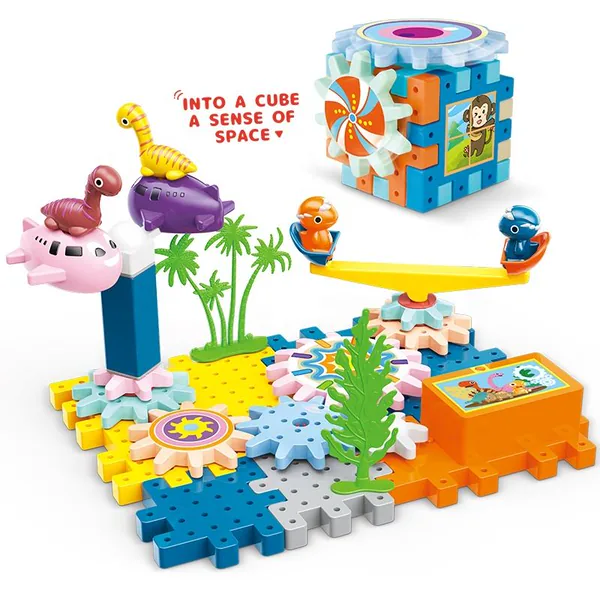
Assume a US importer receives a 72-piece building kit shipment. The receiving clerk counts 68 pieces in one carton against a packing list that says 72. That is the entire factual base of the case. Everything else — the supplier's response, the remedy, the cost split — is a decision the buyer makes, not a fact the record contains.
The invented inputs are: a stated piece count on the packing list, a receiving count, and a carton that arrived with intact tape. The record deliberately omits the supplier's internal count, the factory's production log, and any prior claim history, because a real shortage file usually starts incomplete. That gap is the teaching point.
Two evidence limits apply throughout. First, a receiving count is a buyer-side observation, not proof of what left the factory. Second, a sealed carton does not by itself prove the shortage happened before shipping — it only removes one alternative explanation. Treat both as inputs to a decision, not as conclusions.
Three ways the same shortage can resolve, and what each one requires
| Outcome A — Supplier ships replacement pieces | Requires: packing list showing 72, receiving count showing 68, carton seal photos, and an agreement clause naming replacement as the remedy for a verified count shortfall. Fastest to resolve; depends on the supplier accepting the buyer's count. |
|---|---|
| Outcome B — Credit against the next order | Requires: the same count evidence plus a clause that converts shortfall into a unit credit. Slower, but avoids a separate shipment and its freight cost. |
| Outcome C — No remedy, buyer absorbs the gap | Occurs when the agreement is silent on count shortfalls, or when the buyer cannot produce a receiving count taken before the cartons were opened and mixed. The gap becomes a cost of doing business. |
What a building block spare parts agreement should actually specify
A spare parts agreement for building kits is not one clause. It is four, and each one closes a different gap in the hypothetical record above.
Count verification. State the piece count per set, the counting method, and the window in which a shortfall must be reported. A count taken after cartons are opened and mixed is much harder to defend than one taken at receiving, before the sets are separated.
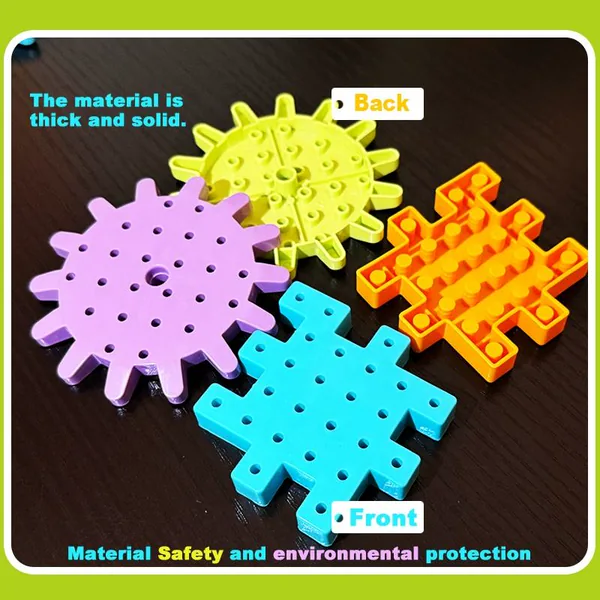
Replacement scope. Name what counts as a spare part: individual bricks, connector pieces, specialty components, and any tool or figure included in the set. Kits that mix brick types with specialty parts need the specialty parts listed separately, because they are the ones that cannot be substituted from stock.
Remedy and timing. Choose replacement shipment, unit credit, or a threshold below which the buyer absorbs the gap. A threshold is normal commercial practice; without one, every four-piece variance becomes a claim.
Evidence standard. Specify which records both sides will accept: signed packing list, carton weight record, seal photos, receiving count sheet. This is the clause that decides whether the hypothetical case above resolves in days or stalls.
Where small-part safety rules change the spare parts conversation
Spare parts for building kits are not only a commercial question. US recalls in 2026 show that small components detaching or being present in toys intended for children under three is a recurring hazard category. CPSC recall 26-686 (August 13, 2026) covered magnetic building cubes and blocks whose magnets could loosen if the cubes broke or opened, posing a magnet ingestion hazard. CPSC recall 26-272 (February 19, 2026) covered magnetic balls and rods sets that violated the mandatory toy standard because they contained small balls and were intended for children under three. CPSC 26-686 CPSC 26-272
The procurement consequence is narrow but real. A spare parts agreement that lets a buyer order loose small components for a set marketed to children under three creates a compliance question the buyer, not the supplier, will have to answer. If the set is age-graded above three, loose spare parts are a normal commercial item. If it is not, the spare parts clause should not become a route around the age grading.
This is a buyer decision, not a supplier guarantee. No agreement clause makes a product compliant; the applicable standard and the tested construction do.
A reusable receiving checklist for the next shortage
Run this before the cartons are opened and the sets are mixed. Once sets are separated, the count evidence weakens.
Weigh each carton and record the figure against the packing list before opening. Photograph the seal and the carton label. Count one reference carton fully and record the piece count by component type, not just the total. Log the count on a dated receiving sheet signed by the person who counted. Report the variance within the window your agreement specifies — a claim filed after the window closes is a claim the agreement may not support.
None of this is a compliance test. It is a commercial record, and it is the only thing that makes Outcome A or B in the table above available.
Decision questions buyers ask about building-kit shortages
Does a sealed carton prove the shortage happened before shipping?
No. An intact seal removes one alternative explanation but does not establish where the pieces went. It supports a claim; it does not prove one.
Should the agreement set a minimum shortfall before a claim is valid?
A threshold is normal commercial practice and keeps small variances from becoming claims. The specific number is a commercial choice, not a standard, and should be stated in the agreement rather than assumed.
Can spare parts be ordered separately for a set marketed to children under three?
That is a compliance question, not a commercial one. Loose small components for a set intended for children under three raise the same small-parts issues the CPSC recalls above describe. Confirm the age grading and applicable standard before treating spare parts as a routine order.
What if the agreement is silent on count shortfalls?
Then the outcome depends on negotiation, not on the contract. The practical fix is to add the four clauses above to the next agreement rather than to argue the current shipment.